While traditional white diamonds have always been popular, colored diamonds are becoming a trendy and meaningful choice for people who want to showcase their one-of-a-kind style.
From soft blush pink to oceanic blue, each hue carries its own symbolism, making it easy to express individuality in engagement rings, fashion jewelry, and custom designs.
This blog explores the science and craftsmanship behind fancy colored lab grown diamonds, revealing how their stunning hues are created and what makes them such a unique choice for modern jewelry lovers.
Why Fancy Colored Lab Diamonds Are So Popular
Fancy colored lab grown diamonds have become increasingly popular because they offer a more personal and modern approach to fine jewelry.
Unlike traditional white diamonds, colored diamonds allow people to express individuality and choose shades that reflect their personality or emotions.
From romantic pink to vibrant yellow or calming blue, each color carries its own symbolic meaning, making jewelry feel more unique and meaningful.

At the same time, many buyers are also drawn to the sustainability and ethical appeal of lab grown diamonds.
As consumers become more conscious about environmental and social issues, colored lab diamonds provide an attractive alternative that combines beauty, creativity, and responsible luxury — and with modern lab technology, that choice now spans a wider spectrum of color than ever before.
Unlike traditional white diamonds, colored diamonds allow people to express individuality and choose shades that reflect their personality or emotions.
From romantic pink to vibrant yellow or calming blue, each color carries its own symbolic meaning, making jewelry feel more unique and meaningful.
Another reason for their popularity is affordability. Natural fancy colored diamonds are extremely rare and often come with very high price tags.
Lab grown diamonds make these beautiful colors much more accessible, allowing consumers to enjoy vivid and luxurious designs at a more reasonable cost.
Lab grown diamonds make these beautiful colors much more accessible, allowing consumers to enjoy vivid and luxurious designs at a more reasonable cost.
At the same time, many buyers are also drawn to the sustainability and ethical appeal of lab grown diamonds.
As consumers become more conscious about environmental and social issues, colored lab diamonds provide an attractive alternative that combines beauty, creativity, and responsible luxury — and with modern lab technology, that choice now spans a wider spectrum of color than ever before.
Today, lab-grown fancy colored diamonds are available in a remarkable range of hues.
The most popular choices include:
- Pink — spanning soft blush to deep rose
- Green — ranging from airy mint to saturated forest
- Blue — from icy pale to rich ocean depth
- Yellow — from warm champagne all the way to vivid canary;
Beyond these four classics, lab technology has also made black, purple, and orange diamonds increasingly accessible.
- Black diamonds carry a bold, graphic quality unlike any other stone.
- Purple and lavender shades offer a quieter, more romantic edge.
- Orange diamonds — one of the rarest tones, even in lab production — read warm andfiery, closer to a sunset than a gemstone.
Whatever the palette, there is now a lab-grown colored diamond to match nearly any aesthetic, mood, or meaning a buyer might want to express.
How Lab-Grown Diamonds Get Different Colors
The fancy colors in lab-grown diamonds aren't coated or artificially applied — they result from the same physics that give natural diamonds their color, just with far greater precision and control.
Labs use two main approaches to create color. The first happens during the growth process itself: specific trace elements are introduced into the CVD or HPHT growth chamber, becoming part of the diamond's crystal lattice as it forms.
The second involves post-growth treatments, where a finished diamond is subjected to processes like high pressure and high temperature (HPHT) annealing or controlled irradiation.
These treatments alter the diamond's internal crystal structure, changing how it absorbs and reflects light — and with it, the color the eye perceives.
The second involves post-growth treatments, where a finished diamond is subjected to processes like high pressure and high temperature (HPHT) annealing or controlled irradiation.
These treatments alter the diamond's internal crystal structure, changing how it absorbs and reflects light — and with it, the color the eye perceives.
Lab Blue diamonds are created by introducing boron during the growth process. As the crystal forms, boron atoms replace some carbon atoms in the lattice, causing the stone to absorb red and yellow wavelengths of light and appear blue.
The concentration of boron directly determines the depth of color, from soft icy blue to rich ocean tones. Visually, the most coveted shades fall in that vivid mid-range — often described as cornflower or steel blue — bright enough to command attention but cool and composed enough to wear every day.
Deeper blues can take on a near-violet quality in certain lighting, while the lightest tones read almost silvery and ethereal.

Lab Yellow diamonds get their warm hue from nitrogen. In HPHT-grown diamonds, nitrogen integrates directly into the crystal lattice during growth, bonding with carbon atoms in specific configurations that selectively absorb violet and blue light — producing tones from pale champagne to vivid canary yellow.
In CVD-grown diamonds, the process works differently: nitrogen present during growth typically causes a brownish tint first, and a subsequent HPHT annealing step is required to convert that into a clean, saturated yellow.
In both cases, the final nitrogen concentration and arrangement determine the color's intensity and exact shade. The lightest yellows have a warm, honeyed quality reminiscent of antique gold — subtle and sophisticated.
The deeper canary shades are unambiguously bold: intensely saturated, sunny, and impossible to ignore even in a simple solitaire setting.
![]()
![]()

The concentration of boron directly determines the depth of color, from soft icy blue to rich ocean tones. Visually, the most coveted shades fall in that vivid mid-range — often described as cornflower or steel blue — bright enough to command attention but cool and composed enough to wear every day.
Deeper blues can take on a near-violet quality in certain lighting, while the lightest tones read almost silvery and ethereal.
Lab Yellow diamonds get their warm hue from nitrogen. In HPHT-grown diamonds, nitrogen integrates directly into the crystal lattice during growth, bonding with carbon atoms in specific configurations that selectively absorb violet and blue light — producing tones from pale champagne to vivid canary yellow.
In CVD-grown diamonds, the process works differently: nitrogen present during growth typically causes a brownish tint first, and a subsequent HPHT annealing step is required to convert that into a clean, saturated yellow.
In both cases, the final nitrogen concentration and arrangement determine the color's intensity and exact shade. The lightest yellows have a warm, honeyed quality reminiscent of antique gold — subtle and sophisticated.
The deeper canary shades are unambiguously bold: intensely saturated, sunny, and impossible to ignore even in a simple solitaire setting.
Green lab-grown diamonds are created through controlled irradiation after the growth process is complete. Exposing the finished stone to a carefully calibrated dose of radiation displaces carbon atoms within the crystal lattice, generating vacancy defects.
These defects selectively absorb light in the orange-to-red wavelength range, which is what gives the diamond its green appearance. The color palette runs from a soft, airy mint through sage and olive to a rich, saturated forest green.
The most desirable tones are a pure medium green with no grey or brown overtones — clean and vivid, closer to an emerald in spirit.
Green diamonds can appear slightly warmer or cooler depending on the light source — a subtle depth that rewards a second look.

These defects selectively absorb light in the orange-to-red wavelength range, which is what gives the diamond its green appearance. The color palette runs from a soft, airy mint through sage and olive to a rich, saturated forest green.
The most desirable tones are a pure medium green with no grey or brown overtones — clean and vivid, closer to an emerald in spirit.
Green diamonds can appear slightly warmer or cooler depending on the light source — a subtle depth that rewards a second look.
Pink lab-grown diamonds are typically produced through a combination of post-growth irradiation and HPHT annealing.
First, controlled irradiation introduces specific lattice defects within the crystal structure. The subsequent high-pressure, high-temperature treatment then stabilizes and refines these defects, shifting the stone's light absorption into the range that produces pink.
By adjusting the irradiation dose and annealing parameters, labs can dial in the result from a delicate blush to a deep, saturated rose.
At the lighter end, pink diamonds have an almost translucent, watercolor quality — romantic and understated. The vivid end of the spectrum is something else entirely: a full, saturated rose that reads warm and bold, entirely on its own terms.

First, controlled irradiation introduces specific lattice defects within the crystal structure. The subsequent high-pressure, high-temperature treatment then stabilizes and refines these defects, shifting the stone's light absorption into the range that produces pink.
By adjusting the irradiation dose and annealing parameters, labs can dial in the result from a delicate blush to a deep, saturated rose.
At the lighter end, pink diamonds have an almost translucent, watercolor quality — romantic and understated. The vivid end of the spectrum is something else entirely: a full, saturated rose that reads warm and bold, entirely on its own terms.
Lab-grown diamonds aren't limited to these four colors.
- Lab grown diamond in black get their dramatic, near-opaque appearance from a high concentration of inclusions or graphite clusters — more raw and architectural in feel than any other fancy color.
- Lab Purple diamonds, produced through irradiation and HPHT treatment similar to pink, range from soft lavender to a deep violet-plum; they're rarer in lab production and carry a quietly regal quality.
- Lab Orange diamonds achieve their warm, fiery hue through a combination of nitrogen and structural defects — a vivid orange reads almost like a sunset captured in stone. Each of these colors follows the same fundamental physics as their more familiar counterparts, just pushing the spectrum further.
Because every step of these processes can be precisely controlled, lab-grown fancy colored diamonds can be produced with remarkable consistency in both hue and saturation — achieving results that rival some of the rarest stones found in nature, at a fraction of the cost.
Are Colored Lab Diamonds Real and Durable?
One of the most common questions consumers ask is whether colored lab grown diamonds are “real” diamonds. The answer is yes. Lab grown diamonds have the same chemical composition, crystal structure, and physical properties as natural diamonds.
They are made of pure carbon and display the same brilliance, fire, and hardness that make diamonds so desirable.
The main difference is simply their origin — natural diamonds form underground over billions of years, while lab diamonds are created in controlled laboratory environments using advanced technology.
They are made of pure carbon and display the same brilliance, fire, and hardness that make diamonds so desirable.
The main difference is simply their origin — natural diamonds form underground over billions of years, while lab diamonds are created in controlled laboratory environments using advanced technology.
Colored lab diamonds are also extremely durable, making them ideal for everyday jewelry. Like natural diamonds, they rank 10 on the Mohs hardness scale — the highest rating possible — meaning they resist scratching from virtually all other materials encountered in daily life.
It is worth noting that diamonds can scratch other diamonds, so storing multiple diamond pieces together without separation is not recommended. Overall, colored lab diamonds are well suited for engagement rings, wedding bands, and other pieces designed for regular wear.

It is worth noting that diamonds can scratch other diamonds, so storing multiple diamond pieces together without separation is not recommended. Overall, colored lab diamonds are well suited for engagement rings, wedding bands, and other pieces designed for regular wear.
Many buyers wonder whether the color will fade over time.
The answer depends on how the color was created.
Diamonds colored through the growth process itself — such as blue (boron) and yellow (nitrogen) — have inherently stable color that will not change under any normal wearing conditions. Diamonds that receive post-growth treatments, such as HPHT annealing for pink or irradiation for green, also maintain their color reliably in everyday wear. Under normal conditions, a high-quality colored lab diamond will hold its color and brilliance for a lifetime.
The answer depends on how the color was created.
Diamonds colored through the growth process itself — such as blue (boron) and yellow (nitrogen) — have inherently stable color that will not change under any normal wearing conditions. Diamonds that receive post-growth treatments, such as HPHT annealing for pink or irradiation for green, also maintain their color reliably in everyday wear. Under normal conditions, a high-quality colored lab diamond will hold its color and brilliance for a lifetime.
How to Choose Your Perfect Colored Lab Diamond
Choosing the perfect colored lab diamond depends on a combination of personal style, symbolism, and jewelry design preferences. The first step is deciding what you want the jewelry to say.
Each color carries its own emotional register — soft and romantic, bold and vivid, calm and grounded — and the right choice is simply the one that resonates most with the person who will wear it.
Each color carries its own emotional register — soft and romantic, bold and vivid, calm and grounded — and the right choice is simply the one that resonates most with the person who will wear it.
Color intensity is another critical factor, and one that directly affects price.
The jewelry industry uses a standardized grading scale to describe color strength: Fancy Light, Fancy, Fancy Intense, and Fancy Vivid — in order from softest to most saturated.
A Fancy Vivid pink or blue commands a significant premium over a Fancy Light of the same carat weight. When reviewing a certificate, look for the color grade descriptor alongside the hue name. For everyday wear, Fancy or Fancy Intense often strikes the best balance of visible color and value; Fancy Vivid is the choice when maximum visual impact is the goal.
The jewelry industry uses a standardized grading scale to describe color strength: Fancy Light, Fancy, Fancy Intense, and Fancy Vivid — in order from softest to most saturated.
A Fancy Vivid pink or blue commands a significant premium over a Fancy Light of the same carat weight. When reviewing a certificate, look for the color grade descriptor alongside the hue name. For everyday wear, Fancy or Fancy Intense often strikes the best balance of visible color and value; Fancy Vivid is the choice when maximum visual impact is the goal.
The jewelry setting and metal choice also play a major role in the final design.
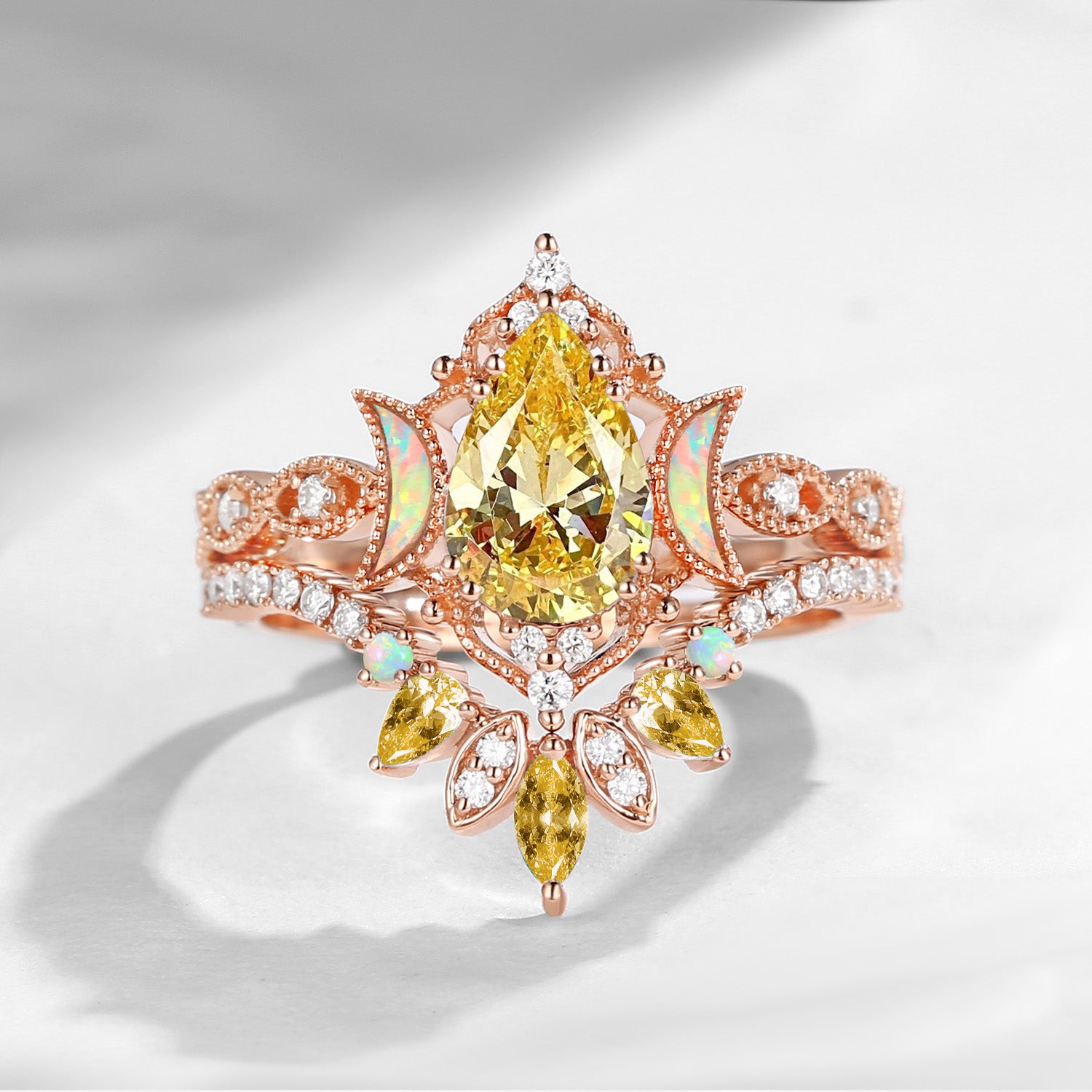
White gold and platinum settings can enhance cooler tones like blue or green diamonds, while yellow or rose gold often complements warm shades such as pink or yellow. Buyers should also think about how the diamond will be worn — whether as an engagement ring, pendant, earrings, or fashion jewelry — since different settings can highlight the stone in different ways.
White gold and platinum settings can enhance cooler tones like blue or green diamonds, while yellow or rose gold often complements warm shades such as pink or yellow. Buyers should also think about how the diamond will be worn — whether as an engagement ring, pendant, earrings, or fashion jewelry — since different settings can highlight the stone in different ways.
Budget is one of the most compelling advantages of lab-grown colored diamonds.
Compared to their natural counterparts — where a vivid pink or blue can command prices far beyond a white diamond of the same size — lab-grown options make bold color accessible at a fraction of the cost.
Compared to their natural counterparts — where a vivid pink or blue can command prices far beyond a white diamond of the same size — lab-grown options make bold color accessible at a fraction of the cost.
In general, blue and yellow diamonds grown with trace elements tend to be priced similarly to high-quality colorless lab diamonds.
Pink and green stones, which require additional post-growth treatment steps, typically carry a modest premium, but remain far more affordable than natural fancy colors.
One final tip: when purchasing a colored lab diamond, always ask for a grading report from a recognized laboratory such as IGI or GIA. A reputable certificate will specify not only the color grade and intensity, but also the origin of the color — whether it formed during growth or through post-growth treatment.
This transparency matters for insurance, resale, and ensuring you know exactly what you're buying. A seller who cannot provide certification for a fancy colored stone is a red flag worth heeding.
Caring for Lab-Grown Colored Diamonds
Colored lab grown diamonds are durable and suitable for everyday wear, but proper care is still important to maintain their brilliance and vibrant appearance over time.
Regular cleaning helps remove oils, dust, and residue that can reduce the diamond’s sparkle. A simple mixture of warm water and mild soap, combined with a soft brush, is usually enough to keep the stone looking bright and clean. After cleaning, the jewelry should be rinsed thoroughly and dried with a soft cloth.
Although diamonds are extremely hard, they can still scratch other jewelry or be scratched by harder materials in certain situations.
Storing colored lab diamond jewelry separately in a soft pouch or lined jewelry box can help prevent damage and protect the setting. It is also recommended to remove jewelry before activities such as heavy exercise, swimming, or household cleaning, especially when exposed to harsh chemicals.
Professional maintenance can also help preserve the beauty of colored lab diamonds.
Having the jewelry inspected occasionally by a jeweler ensures that prongs and settings remain secure and that the diamond continues to shine at its best. With regular care and proper storage, colored lab grown diamonds can maintain their color, brilliance, and elegance for many years, making them a lasting and meaningful jewelry choice.
Fancy colored lab grown diamonds combine science, creativity, and modern luxury in a unique way.
Their vibrant colors, affordability, and ethical appeal have made them increasingly popular among consumers looking for jewelry that feels both meaningful and stylish. Whether you prefer a soft pastel shade or a bold statement color, colored lab diamonds offer a beautiful way to express individuality while enjoying the lasting beauty of a real diamond.
Ready to find yours?
Explore our collection of fancy colored lab-grown diamonds and discover the hue that speaks to you.
Ready to find yours?
Explore our collection of fancy colored lab-grown diamonds and discover the hue that speaks to you.